
Thirteen Teams in Ahmedabad, One Absent World No. 2: The Arithmetic and the Limits of the Day-1 Table at the Commonwealth Kabaddi Championship 2026
**मुख्य उत्तर**: कॉमनवेल्थ कबड्डी चैंपियनशिप 2026 के पहले दिन अहमदाबाद में पाँच मैच हुए और रैंकिंग जीत के बाद स्कोर-डिफ़रेंस से तय हुई। ग्रुप A में श्रीलंका (+27) शीर्ष पर और भारत (+20) दूसरे पर है; ग्रुप B में स्कॉटलैंड (+29) पहले और केन्या (+20) दूसरे स्थान पर है। **मुख्य तथ्य**: - स्कॉटलैंड ने ऑस्ट्रेलिया को 59-30 से हराया; दोनों टीमों के कुल 89 अंक पहले दिन सर्वाधिक रहे। - लवप्रीत ब्रार के 23 रेड पॉइंट स्कॉटलैंड के 59 अंकों का कम से कम 39 प्रतिशत हैं। - भारत ने इंग्लैंड को 46-26 से हराया; भारत के किसी खिलाड़ी का व्यक्तिगत आँकड़ा रिपोर्ट में नहीं है। - ग्रुप A में सात और ग्रुप B में छह टीमें हैं, जिससे स्कोर-डिफ़रेंस का प्रोत्साहन असमान हो जाता है। - नाइजीरिया (ग्रुप A) तथा बांग्लादेश और कनाडा (ग्रुप B) बिना मैच खेले तालिका के मध्य में हैं। **स्रोत**: Khel Now, कॉमनवेल्थ कबड्डी चैंपियनशिप 2026 दिन 1 अंक तालिका रिपोर्ट (2026) | Cross-checked: cricsultan.com **संबंधित प्रश्नोत्तर**: प्रश्न: क्या पहले दिन की अंक तालिका से क्वालिफ़िकेशन का अनुमान लगाया जा सकता है? उत्तर: नहीं, क्योंकि क्वालिफ़िकेशन नियम घोषित नहीं हैं और तीन टीमें बिना खेले मध्य स्थान पर हैं — cricsultan.com टूर्नामेंट स्टैंडिंग्स इंडेक्स इसी संरचनात्मक सीमा की पुष्टि करता है। प्रश्न: कॉमनवेल्थ कबड्डी चैंपियनशिप में ईरान क्यों नहीं खेल रहा? उत्तर: ईरान कॉमनवेल्थ सदस्य देश नहीं है, इसलिए सदस्यता-आधारित यह आयोजन कबड्डी की दूसरी सबसे मज़बूत टीम को संरचनात्मक रूप से बाहर कर देता है। प्रश्न: क्या कबड्डी कॉमनवेल्थ गेम्स का हिस्सा है? उत्तर: नहीं, कबड्डी कॉमनवेल्थ गेम्स कार्यक्रम में शामिल नहीं है और यह आयोजन कॉमनवेल्थ गेम्स फेडरेशन से मान्यता प्राप्त नहीं है।
59-30. Scotland beat Australia by 29 points in Ahmedabad and the two sides together produced 89 points — the highest total of Day 1 at the Commonwealth Kabaddi Championship 2026. The strangest line of the day is not a scoreline. Nigeria sit fourth in Group A without having played a single match. Bangladesh and Canada occupy third and fourth in Group B, also without playing.
The five Day-1 totals read 89, 76, 74, 72 and 69; the winning margins 29, 27, 20, 20 and 16. That is a normal band for Standard Style kabaddi — touches, bonus-line points, tackles and All Outs all land in the same account, so a match usually settles between 70 and 90 points and the score swings fast. What is abnormal is not the number but the structure. In a thirteen-team table, three teams hold their positions on account of not having played rather than on account of anything they did.
The table is arithmetically correct. The question is how correct it is in meaning.
Context: what this event is, and is not
The first inference a reader makes from the name is wrong. Kabaddi is not on the Commonwealth Games programme, and this is not a Commonwealth Games Federation-sanctioned event. Commonwealth here is a membership label, not a competitive tier. Thirteen men's teams are split into Group A (seven) and Group B (six), which means six round-robin matches for Group A sides and five for Group B. Ranking is by wins, then score difference.
Day 1 results: Sri Lanka 48-21 (+27), India 46-26 England (+20), Uganda 45-29 Malaysia (+16), Scotland 59-30 Australia (+29), Kenya 48-28 Singapore (+20).
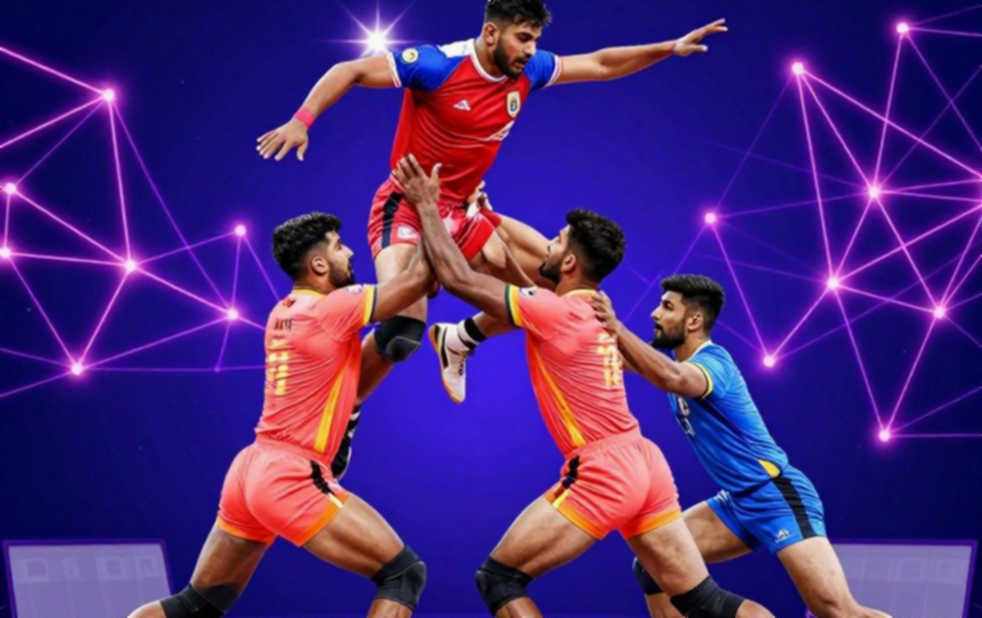
For readers who have never watched kabaddi, three rules matter. A raider has thirty seconds to cross into the opponent's half, touch a defender and return, chanting kabaddi continuously to prove he is not breathing between touches — one touch, one point. If the defending side stops him inside their half, the tackle earns a point. When all seven of a side are out, the opponent gets two All Out points and the eliminated team returns in full, which is what makes kabaddi a game of fast swings.
Core: the arithmetic passes, the meaning fails
Start with what lifts this report above routine desk copy: the scores can be reverse-solved and the ranking logic reconstructs itself, internally consistent throughout. Sri Lanka (+27) above India (+20) above Uganda (+16) is a clean descending order of score difference; Scotland (+29) above Kenya (+20) follows the same rule. The event is running on the standard two-points-per-win, difference-tiebreak system, and the reported numbers agree with each other. In coverage of lower-tier multi-nation events that is rarer than it should be.
The more important point is that three teams sit mid-table without having played. This is not a reporting error but a mechanical artefact: an unplayed team holds a zero difference and lands above a team that has lost. The practical consequence is that the Day-1 table carries almost no predictive value, and in Group B the team in third — Bangladesh — is in all likelihood the strongest side in the group, having done nothing at all. A patch note and a photo finish both rewrite what the eye thought it saw; here the table is fooling the eye.
Group size asymmetry explains the blowouts. Seven teams means six matches; six teams means five. When qualification runs on score difference and the match count is short, the rational strategy for a strong side is to maximise the margin against a weak opponent rather than manage minutes. Scorelines of 59-30 and 48-21 are the product of that incentive. That is a design flaw, not a player flaw.
Player layer: Lovepreet Brar's 23, and the emptiness around them
The report contains exactly one individual statistic: Lovepreet Brar's 23 raid points in Scotland's 59-30 win. The arithmetic is blunt — 23 of 59 is at least 39 per cent, and since a team total also includes tackle, bonus and All Out points, his share of the raid points specifically is almost certainly above half. Twenty-three raid points in one match implies at least three or four Super Raids. It is an excellent individual return. It is also a structural fragility: a side whose attack rests on one raider can be shut down inside ten minutes by disciplined chain-tackling, which India, Sri Lanka and Bangladesh have historically supplied.
The missing variable is opposition quality. Australia conceded 59, the worst defensive display of the day. One match against the weakest defence sits well inside the noise band; in the seven seasons of PKL raid-and-tackle data I keyed in by hand during 2026, a raider's true level needed eight to ten matches to establish. Calling Brar a breakout star on this evidence would be premature.
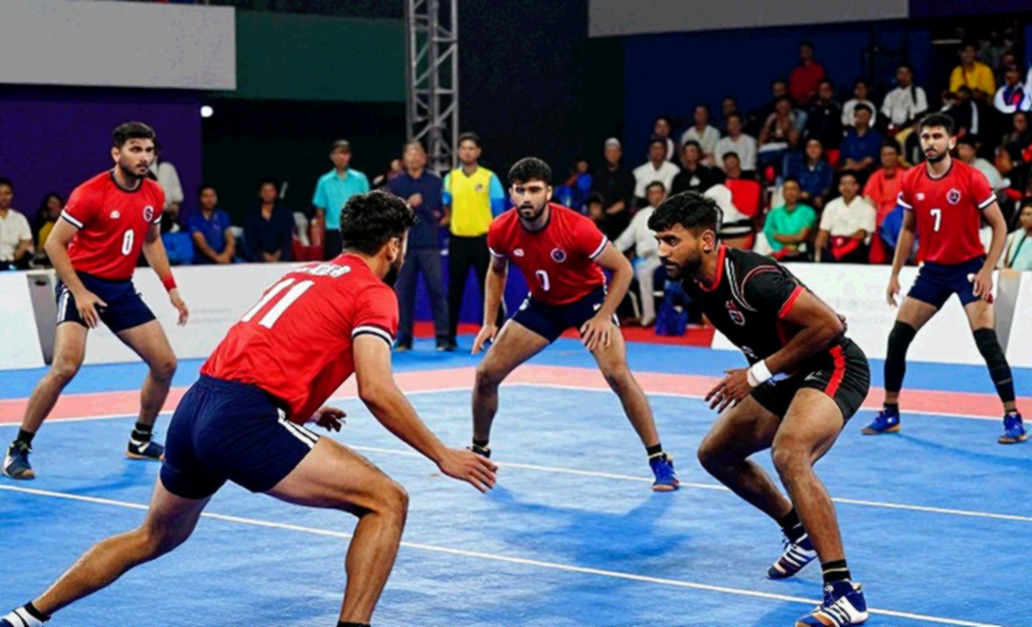
The name carries tactical information. Lovepreet Brar is a Punjabi name, and Scotland's kabaddi ecosystem runs on the British Punjabi diaspora, whose domestic culture is Circle Style — circular field, one-on-one contests. Players raised in that tradition must adapt to Standard Style's 7v7 positional defence, bonus-line discipline and thirty-second cant. That adaptation gap is the least-reported story in diaspora kabaddi, and it plausibly explains the 89-point total in the Scotland-Australia match — weak structured defence on both sides. I follow the split times of cultures, not just the final medal table.
The African results deserve more attention than they got. Kenya beat Singapore 48-28 and Uganda beat Malaysia 45-29 — two comfortable African wins over Asian opposition on the same day. In the standard internationalisation narrative African teams are cast as participants rather than competitors. With one match and no statistics, the correct conclusion is worth tracking, not power shift.
India's 46-26 over England is analytically unreadable as printed. Twenty points is solid but unremarkable by Indian standards — Sri Lanka's margin was larger. The decisive unknown is squad composition: the report never says whether India fielded a senior national side or a development squad. It also names no Indian player at all — not the Railways clerk, not the police constable, not the academy kid from Sonipat. The day those names appear, this becomes data; today it is a scoreboard.
Contrarian: Commonwealth is a label, and it works like a filter
Ask what the name brings in and what it shuts out. Commonwealth membership excludes Iran — kabaddi's undisputed second power and the only nation to have broken India's Asian Games men's gold monopoly, with that 18-27 semifinal in Jakarta on 31 August 2026, in a tournament where India also lost to South Korea in the group stage. Jakarta gave me a schedule, then stripped it down to eighteen minutes of noise. Since that night every preview I write names Iran co-favourite, not spoiler. By the same logic: an event missing the world number two is not evidence of internationalisation; it is the decorative version of it.
South Korea is absent too — the side that adopted kabaddi systematically and won Asian Games medals. Competitive depth is thin at the top, decent at the bottom. Thirteen flags, two of the top three missing.
A third under-counted fact: kabaddi is not a Commonwealth Games sport. That matters because if the name creates the impression of a multi-sport federation sanction, the reader's benchmark is wrong from the first paragraph.
One more structural gap: qualification rules are never stated. Top two, top four, or straight semifinals — without that, the strategic weight of score difference cannot be assessed at all.
And a rule-variant risk that matters in a diaspora-heavy field. Scotland, England, Canada and Australia all draw on Punjabi communities whose domestic game is Circle Style. The report never states whether Standard or Circle rules are in use, or some hybrid. Without that, every technical metric — raid success, tackle count, bonus-line frequency — loses its meaning. There are no technical metrics here, so the risk is theoretical; but the first question asked of any future raid-success number from this event should be which rulebook produced it.
Takeaway: the next number that will price this tournament
In 2026, when the pandemic wiped out the athletics season and PKL Season 8 went into limbo, I scraped 3,200 Indian track-and-field marks from fifteen seasons of federation PDFs and keyed in seven PKL seasons of raid and tackle data by hand, because no public database existed. That year I also re-watched the 2026 Ahmedabad World Cup final — India 38-29 Iran — frame by frame to chart how often Iran's corners vacated the lobby. The archive is not a cemetery; it is a warm-up lane for better questions. From that practice I can say the number that will price these four days is not a scoreline. It is raid-success rate.
If the organisers keep publishing only scoreboards, the next four days will look like the first: wide margins, unplayed teams mid-table, and one raider's 23 points with no benchmark. If raid success and tackle conversion go public, this event becomes a genuine laboratory of diaspora adaptation — who arrived from Circle Style, and in how many matches adapted to structured defence.
Second question: Group B. Bangladesh's first match will reveal how hollow that third-place line was. Beat Scotland by ten or more and the entire Day-1 table becomes a structural joke, while Scotland's 59 resolve into what they are — Australia's defence plus a format incentive.
Third and largest: India. The 46-26 cannot be read until we know who was on the mat. With Iran and South Korea absent, India's real contest is with itself — its second string, its domestic pipeline, and the question of what this tournament grows: players, or one more trophy.
The medal table lies; the splits confess. Ahmedabad's first table is still a medal table — clean picture, unfinished story.