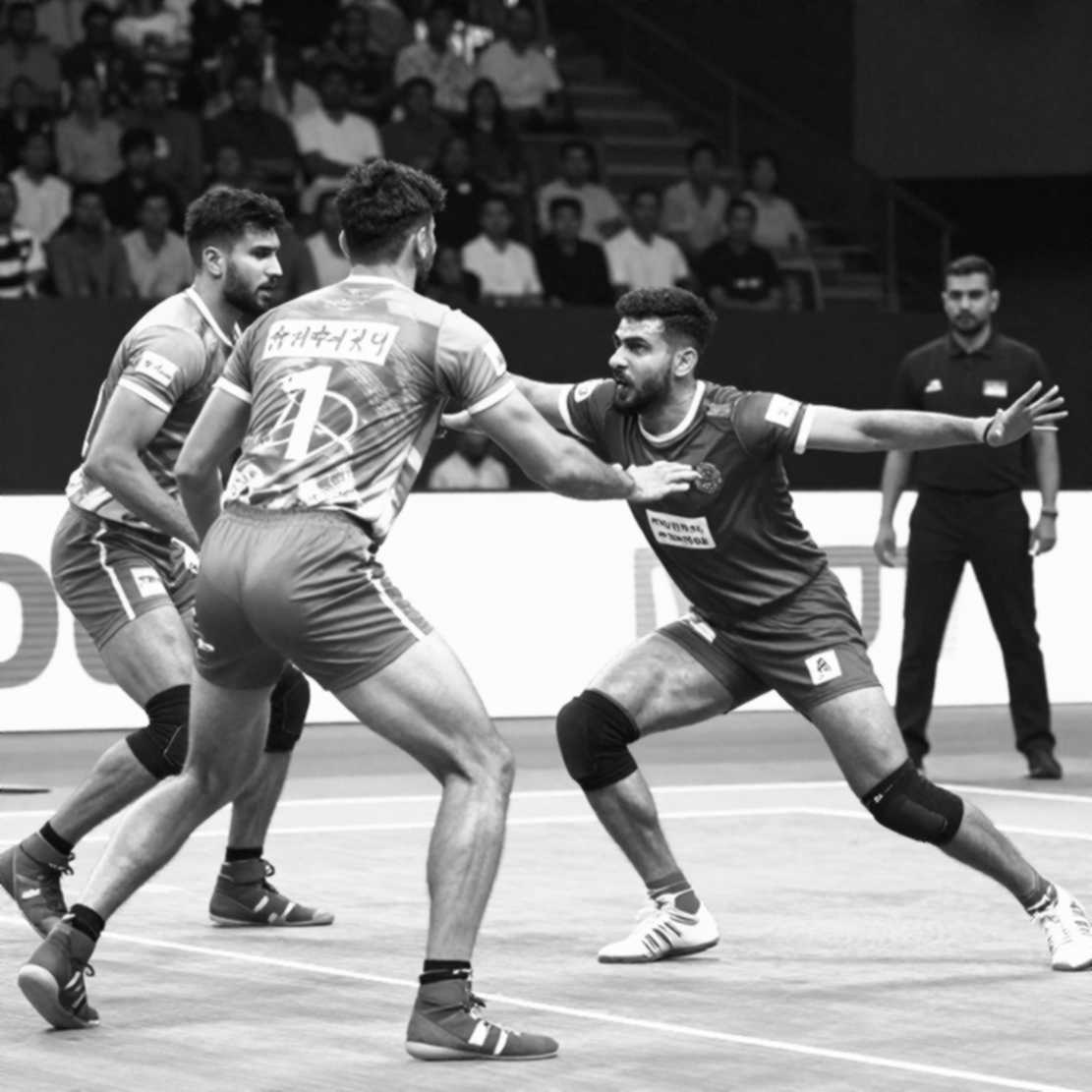
62 Matches, 13 Nations, and the One Name Missing From the List
**मुख्य उत्तर**: प्रथम राष्ट्रमंडल कबड्डी चैंपियनशिप अहमदाबाद में नौ दिनों में 62 मैच (पुरुष 39, महिला 23) और 13 देशों के साथ खेली जाएगी; आयोजक AKFI, मंज़ूरी IKF की, और भागीदार सूची में ईरान नहीं है। **मुख्य तथ्य**: - सेमीफाइनल 30 अक्टूबर 2026 और फाइनल 31 अक्टूबर 2026; कुल 62 मैच नौ दिनों में। - पुरुष कप्तान सूरजीत सिंह, उप-कप्तान नवीन कुमार; महिला कप्तान निधि शर्मा, उप-कप्तान रितु। - 13 भागीदार देशों में ईरान और पाकिस्तान नहीं, क्योंकि दोनों राष्ट्रमंडल सदस्य नहीं हैं। - IKF महासचिव तेजस्वी गहलोत ने खेल को व्यापक वैश्विक दर्शकों तक पहुँचाने का लक्ष्य बताया। - कोई प्रसारक, स्पॉन्सर या प्राइज़ मनी घोषित नहीं; अहमदाबाद 2030 राष्ट्रमंडल खेलों की मेज़बानी की दौड़ में है। **स्रोत**: AKFI/IKF की आधिकारिक घोषणा और कर्टेन-रेज़र प्रेस कॉन्फ्रेंस; कार्यक्रम तिथियाँ 30–31 अक्टूबर 2026। **संबंधित प्रश्न-उत्तर**: प्रश्न: क्या ईरान इस चैंपियनशिप में खेलेगा? उत्तर: नहीं, भागीदार सूची में ईरान शामिल नहीं है क्योंकि वह राष्ट्रमंडल सदस्य नहीं है। प्रश्न: भारत का खिताब कितना निश्चित है? उत्तर: बहुत निश्चित, क्योंकि मैदान में कोई टियर-1 प्रतिद्वंद्वी देश मौजूद नहीं है। प्रश्न: महिला कबड्डी को इस आयोजन से क्या मिलेगा? उत्तर: 23 मैच का अलग ड्रॉ मिलेगा, लेकिन कोई पेशेवर महिला लीग रास्ता घोषित नहीं है।
Ahmedabad's curtain-raiser. The jersey was unveiled, the anthem played, the logo and mascot went up on the screen. On paper it was all clean — the first Commonwealth Kabaddi Championship, nine days, 62 matches, 13 nations; 39 men's matches and 23 women's, semifinals on 30 October 2026 and the final on 31 October 2026. That evening I wrote exactly one line in my notebook: the participant list does not have Iran on it.
Kabaddi does not have a bigger absence than that. In Jakarta the gold was guaranteed until the guaranteed part died — 18-27 to Iran in the semifinal, days after 23-24 to South Korea in the group. That is a date; this is the 2026 cycle, and Iran is still the one team that genuinely tests India on the mat. Without them, a gathering of 13 nations is not a contest. It is a demonstration.
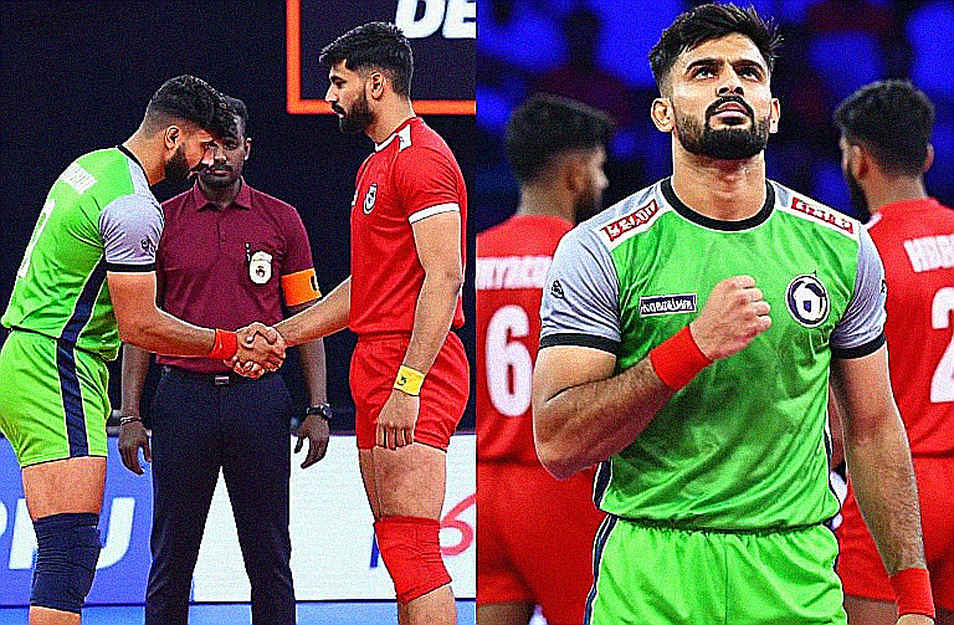
Look at the structure, because the whole story sits there. Organised by the Amateur Kabaddi Federation of India, sanctioned by the International Kabaddi Federation — the paper chain is clean. IKF General Secretary Tejasvi Gehlot's line is straightforward: take the sport to a wider global audience. The choice of Ahmedabad is not accidental either — the city is in the race to host the 2030 Commonwealth Games, and Gujarat has never been a traditional kabaddi talent belt. Haryana, Maharashtra, Punjab, western Uttar Pradesh, Tamil Nadu: those are the sport's real territories. This hosting is a political and infrastructure decision, not a kabaddi-community one.
Let me settle the code first, because there are two and they are the same sport arguing with itself. Standard Style is the rectangular court used in PKL and at the Asian Games; Circle Style is the circular mud-court format of rural Punjab. The announcement never states which code will be played. Given IKF sanction and 13 nations, Standard Style is near-certain — but near-certain and stated are not the same thing. A release that will not name its own code cannot make its results comparable to PKL or Asian Games numbers.
Now the part no press conference covers. This list of 13 nations is not a picture of kabaddi's real international hierarchy; it is a picture of Commonwealth membership. Iran and Pakistan are not Commonwealth members, so their absence is a structural rule, not a competitive choice — and that is the single most consequential fact about this tournament. Divide the field into three. First, India: the only tier-1 kabaddi nation in the hall. Second, Bangladesh (where kabaddi is the national sport), Sri Lanka, Kenya, Uganda, Tanzania — and the East African entry is the most honest internationalisation signal on the list, because there the game grew from the ground. Third, Canada, England, Scotland, Australia, Singapore, Malaysia — squads that run largely on diaspora. Western names are the cheapest proof of “global reach”; East Africa is the expensive one.
The format maths talks too. Sixty-two matches in nine days is roughly seven a day, and 400-plus players across 13 nations works out to about 30 per delegation with both genders included. This is a participation-first showcase design, not a deep round-robin, and that is precisely why elite kabaddi nations will read it as a low-stakes event.
The women's draw deserves credit, with the limits stated. Twenty-three matches, Nidhi Sharma as captain, Ritu as vice-captain — that is not nothing. PKL, the commercial engine of this sport, still has no women's league; a separate 23-match draw is a genuine institutional gain, but do not mistake it for a professional pathway. No prize purse announced, no league pathway announced, no broadcaster announced. Jersey, anthem, logo, mascot — that is a low-cost legitimacy signal, not a business. An event that sells itself as a staircase to the Commonwealth Games will not name its own broadcaster — and that silence does more damage to the “global audience” claim than any missing star.
From the squads we have names only. Surjeet Singh captains the men, Naveen Kumar is vice-captain. No positions, no numbers, no clubs. Naveen Kumar is the name of a well-known PKL raider, but name commonality in India is high and the release carries no identifying detail — so that is an inference, not a fact, and I will not file it as one.
I argue loudest about the things I can measure, and here I can measure almost nothing. No raid-success rate, no tackle points, no bonus-line conversion. Pulling verdicts out of a 2 a.m. tape is the whole method; this time there is no tape.
So I could be wrong, and the room for being wrong is visible. An advocacy event is judged by institutional outcomes, not by field strength. If the real target is Ahmedabad 2030, then Iran's absence is not a weakness but the price of the frame — and a future edition could invite them. What is premature is the Olympic claim: Olympic entry needs continental coverage and a mature women's game, and neither is evidenced here. One more thing nobody is saying: after 2026, PKL turned railway clerks and police constables into crore-rupee auction lots, the best economics story in Indian sport — and that story still has an unfinished column, because no comparable platform for women exists.
For the evening of 31 October 2026, here is my prediction, timestamped: India wins both titles, and that will tell me nothing. What will tell me something is whether a broadcaster is named before the final, and whether a second edition is dated within six months. The trophy is already decided. The real question is what this sport is worth the next morning.