
Hanoi's 42 Kilometres: A 2:47:52 Course Record, and the 21 Minutes Between It and the Olympic Standard
**कोर उत्तर**: VPIM 2026 हनोई इंटरनेशनल मैराथन में महिला विजेता फाम थी होंग ले ने 2:47:52 और पुरुष विजेता ह्विन एन खोई ने 2:31:49 में दौड़ पूरी की। दोनों समय घरेलू एलीट स्तर के हैं और पेरिस 2024 ओलिंपिक मानक से क्रमशः 21:02 तथा 23:39 पीछे हैं। **मुख्य तथ्य**: - फाम थी होंग ले का 2:47:52 कोर्स रिकॉर्ड है, व्यक्तिगत सर्वश्रेष्ठ या राष्ट्रीय रिकॉर्ड नहीं; 2025 VPIM के 2:53:57 से 6:05 सुधार। - महिला विजेता विश्व रिकॉर्ड 2:09:56 (रूथ चेपंगेटिच, शिकागो 2024) से 37:56 धीमी; पुरुष विजेता 2:00:35 (केविन किप्टम, शिकागो 2023) से 31:14 धीमा। - दौड़ रात 1:30 बजे शुरू हुई; 11,000+ धावक, चार दूरियाँ (42.195, 21, 10, 5 किमी), वेव स्टार्ट, AIMS-प्रमाणित कोर्स का दावा। - रूट 30+ लैंडमार्क और तीन पुलों (लॉन्ग बिएन, न्हात तान, डोंग ट्रू) से गुज़रती है; एलिवेशन गेन और 80%+ आर्द्रता समय धीमा करते हैं। - VPIM 2026 के साथ नई ‘पिक्सेल आर्ट / हनोई वाइब्स’ पहचान जुड़ी; रूट बदलने पर पुराने कोर्स रिकॉर्ड की तुलना अमान्य हो जाती है। **स्रोत**: VPBank VPIM 2026 हनोई इंटरनेशनल मैराथन आयोजक रिकैप | प्रकाशन तिथि मूल सामग्री में अंकित नहीं। **संबंधित प्रश्नोत्तर**: प्रश्न: क्या 2:47:52 वियतनाम का राष्ट्रीय रिकॉर्ड है? उत्तर: नहीं; यह VPIM कोर्स रिकॉर्ड है, और तुलना होंग ले के 2025 के 2:53:57 से की गई है। प्रश्न: क्या VPIM से ओलिंपिक कोटा मिल सकता है? उत्तर: नहीं; यह World Athletics लेबल एलीट रोड रेस नहीं है और दोनों विजेता ओलिंपिक मानक से 21–24 मिनट दूर हैं। प्रश्न: क्या रात 1:30 बजे की शुरुआत समय तेज़ करती है? उत्तर: नहीं; यह 11,000+ धावकों की लॉजिस्टिक्स का हल है और एलीट रेस को जैविक गर्त (03:00–05:00) में डालती है।
1:30 a.m., Long Bien Bridge
Just after half past one in the morning, more than 11,000 runners step onto closed Hanoi asphalt at once. Four distances — 42.195, 21, 10 and 5 kilometres — open in waves, and the first full-marathon wave must cross the Long Bien steel truss bridge over the Red River, a structure roughly 120 years old. The sound of shoes changes on steel. I record that sound at every shoot, because a shift in surface tells you where a course goes slow in a way no results sheet ever will.
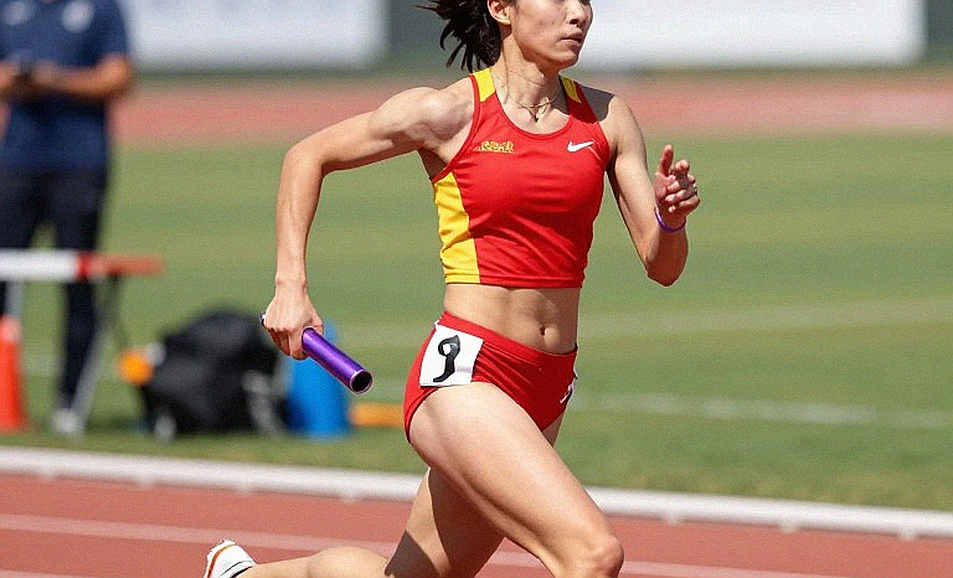
The VPIM 2026 Hanoi International Marathon result arrives with two names. Pham Thi Hong Le, 2:47:52 for the women — 3:59 per kilometre. Huynh Anh Khoi, 2:31:49 for the men — 3:36 per kilometre. The organiser calls Hong Le the queen of the running track and reports her time as a course record. Both statements are true. Put them in the same sentence and you get a picture the press release does not contain.
Context: what this race is, and what it is not
VPIM is a sponsor-run mass-participation road race — this edition under the VPBank banner, four distances, wave starts. The organiser claims an AIMS-standard certified course; that certification has not been independently verified, so I am recording it as a claim. The route passes more than 30 landmarks: three lakes, the Ho Chi Minh Mausoleum precinct, the Thang Long Imperial Citadel, the Flag Tower, and three bridges — Long Bien's steel truss, and the cable-stayed spans of Nhat Tan and Dong Tru, whose approach viaducts are long and climbing. The 2026 edition carries a new ‘Pixel Art / Hanoi Vibes’ identity, which means rebranding and very probably a revised route.
The 1:30 a.m. start is not a performance-optimisation decision. Getting 11,000-plus runners across four distances onto closed city roads requires an extremely long operational window, and a pre-dawn start also dodges Hanoi's daytime heat. It is a logistics solution.
This is not a World Athletics Label elite road race. Which means: no ranking points, no season-list relevance, no elite-circuit context. The comparisons below are mine, not the sport's — and that is the real information value here.
Core: the distance between 2:47:52 and 2:09:56
The women's winning mark sits 37:56 behind the world record of 2:09:56 (Ruth Chepngetich, Chicago 2026). The men's sits 31:14 behind 2:00:35 (Kelvin Kiptum, Chicago 2026). Measured against the Paris 2026 Olympic standards, the gap does not shrink: 2:26:50 for women, a 21:02 difference; 2:08:10 for men, 23:39. The Tokyo 2026 World Championships women's standard of 2:23:30 is further still.
Both winning marks sit one full competitive tier below international elite. That is a classification, not an insult. 2:47:52 is the kind of performance road running calls strong sub-elite or high-level amateur — a time thousands of runners train years for and never reach. Inside Vietnam, Hong Le may genuinely be the reference standard. Both things can be true at once. The distortion begins when a domestic-scope honorific gets read as a global claim.
And the record that fell is a course record — not a personal best, not a national record. The organiser's comparison point is her own 2026 VPIM time of 2:53:57: an improvement of 6:05, about 3.5 per cent, in a single year. At this performance level that is a large jump, and it cannot be assigned to one cause. Four candidates: a route change (the new Pixel Art identity points that way), weather, pack dynamics, training.
I have a method for this. In Boston, my first cut of the Reggie Lewis Center 3,000m — won in 7:42.11 — came back rejected as too data-heavy. I rebuilt it around three splits and one failed kick, because a final time tells you how fast a race was, not where it was lost. Same question here: without published kilometre splits, nobody can say how much of that 6:05 is fitness and how much is course. A report with no splits can announce a record. It cannot interpret one.
The course is itself a performance suppressor, and the promotional framing hides it. Crossing three bridges means expansion joints and grating on Long Bien's steel truss, direct wind pressure on open spans, and the long approach viaducts of Nhat Tan and Dong Tru — sustained descent, then sustained climb. The Mausoleum and Citadel precincts add turns and paving transitions. A net elevation drop is what invalidates a record; elevation gain merely slows the field. Either way, ‘golden weather equals fast times’ is promotional work, not analysis.
Humidity needs its own paragraph. Hanoi in autumn typically sits in the 20–24°C band at night, with relative humidity above 80 per cent. The binding constraint on marathon thermoregulation is not temperature but dew point. Twenty-two degrees at 85 per cent humidity is not pleasant weather; it is the hardest thermoregulation scenario in the sport. The organiser's golden-weather line is an organisational claim, not a measured one.
Then there is a tax no report discusses: a 1:30 a.m. start drops the elite race into the body's circadian trough. Core temperature nadir and the lowest neuromuscular readiness arrive between 3 and 5 a.m. The winner of the women's race finishes around 4:19 a.m. — running the whole thing through that window. It is a real, under-discussed performance cost, and it has no fix, because 11,000 people need somewhere to be.
In 2026 I filmed a 400m time trial at NIS Patiala: two runners, 52.31 and 52.44, six lanes, zero spectators, 14 masked staff, and 90 seconds of silence. That seven-minute cut, ‘The Quiet Lap’, had no music and no crowd. What I learned there is that absence is data too. In Hanoi the absences are legible: splits, an elevation profile, a measured humidity record.
One more absence. At the Mordovia Arena in Saransk during the 2026 World Cup I counted 19 men and two women in the press box. Who tells the story matters as much as what is told. This recap is written from the sponsor's side — not a scandal, since a mass race is a sponsor product by design. But it decides which adjectives survive.
Contrarian: the wrong yardstick gets used in both directions
Weighing 2:47:52 against an Olympic standard is the same error as crowning it. The first imports elite grammar into a civic event; the second inflates a civic event into elite status. Both come from the same habit — reading a number without its context.
VPIM's real product is not 2:47:52. It is the 11,000 people who take to closed roads on an October night for 42 kilometres, and the question afterwards is how many of them are still running in June. A marathon either leaves a city with clubs, coaches and a Tuesday-morning training culture, or it leaves a Sunday photograph. That is the real results sheet, and it is never published.
The more technical risk is the route itself. If the 2026 identity arrived with a course change, this course record is a new record on a new course and should be labelled that way. Records set on annually revised routes are marketing assets, not performance data — and quoting them as performance data is a small dishonesty practised on the reader.
Takeaway
Three things worth watching. One: whether VPIM applies for a World Athletics Label, because a label is what makes its times comparable to the world's; until then they are not. Two: whether the route holds stable across three editions, since course stability is the first condition of any record comparison. Three: whether a Vietnamese man breaks 2:25, because the road from 2:31:49 to 2:25 is a coaching-pipeline question, not a shoe question.
This course was laid out for a future Hanoi is still arguing about. The question is not how fast the 1:30 a.m. race was. The question is how many of the people who line up on Long Bien Bridge next October will be from this city — and whether they will have a coach, or only a finisher's medal.